
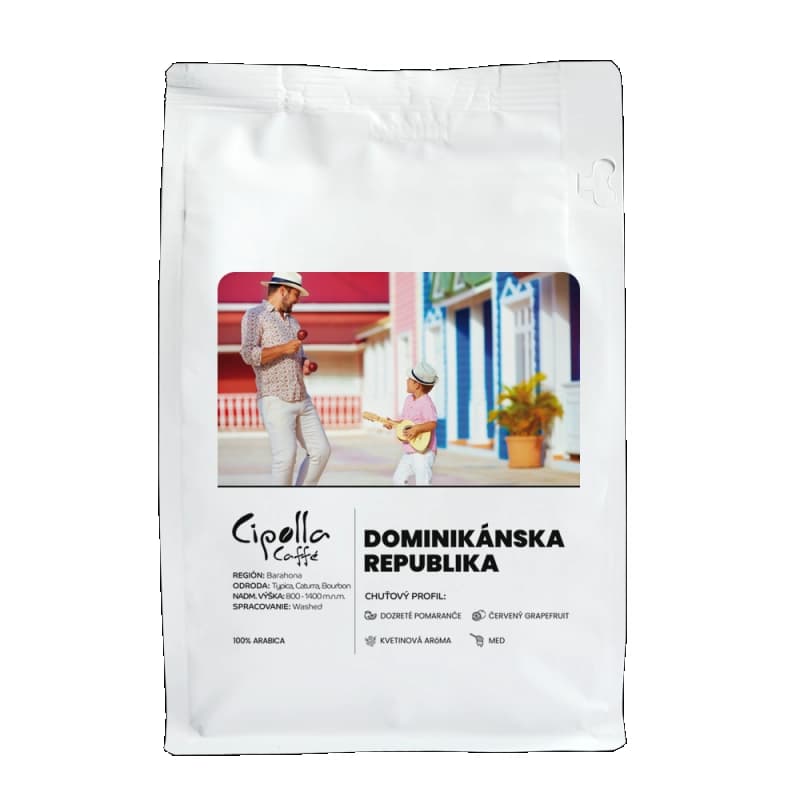
Dominican Republic
A fruity coffee with notes of ripe orange, red grapefruit, and floral aromas.
Ripe orangesFloral aromaHoney
In stockSize: 250 g
9,90 €8,32 € excl. VAT
Whole bean · Single origin
Whole bean (unground) — freshness stays in the bean. Or we’ll grind it for your brew method (+1 €).
✓ In stock — ready to ship
✓ Free in-store pickup in Banská Bystrica
✓ We ship via Packeta and GLS within 48 hours
✓ Free shipping across Slovakia on orders over 49,00 €
Papaya, cocoa beans, molasses and honey. A sweet, calm coffee from Sumatra for filter or espresso.
It is sweet and deep, with no sharp edges. Papaya brings gentle fruit, cocoa beans add depth, and molasses with honey give a long sweetness. The coffee is not flavoured and no honey is added. These are the natural flavour notes of the bean.
It comes from Rakyat Farm on the Indonesian island of Sumatra, run by farmer Aulia Kahfi. It grows at 1,300 to 1,600 m above sea level, and its label lists six coffee varieties. It is honey processed: the skin is removed, but part of the sweet pulp stays on the bean while it dries. On Sumatra, the traditional method is a different one, called giling basah.
This is a coffee for moments when you are in no hurry. As filter, we find the papaya and honey come forward, while espresso brings out the cocoa and molasses. Try it without sugar. It brings its own sweetness.
Straight from the bag label — the flavors and origin of this coffee.
 Papaya
 Cocoa beans
 Molasses
 Honey


Follow the bean from the farm all the way to your cup.
Rakyat Farm on the Indonesian island of Sumatra is run by farmer Aulia Kahfi. According to the importer, the farm lies in the Bebesen subregion of Aceh Tengah in northern Sumatra, in the coffee-growing area around the town of Takengon. Also according to the importer, Aulia inherited the farm from his family and adds coffee cherries from about 15 neighboring growers to his own harvest. The coffee trees grow at 1,300 to 1,600 m above sea level.
This coffee comes from Rakyat Farm in Sumatra, run by farmer Aulia Kahfi, and grows at 1,300 to 1,600 m above sea level. The varieties are Abyssinia, Ateng, Caturra, Gayo, Timtim and Typica, a mix of old and more modern cultivars. It is honey processed: the skin is removed, but part of the sweet pulp stays on the bean as it dries, which usually makes for a sweeter, more balanced cup. In Sumatra, coffee is grown mainly by smallholders on plots of about one hectare. The island's traditional method is giling basah, where the bean is hulled while still wet; this coffee takes the honey route.
Grind size determines how quickly water passes through the coffee and how much flavor it pulls out. Grind too fine and the coffee turns bitter (over-extracted); too coarse and the cup ends up watery and sour (under-extracted) — the right grind size is the foundation of a balanced flavor.
A fine grind with a texture somewhere between fine sand and flour. The dense puck of ground coffee resists the water, so under 9 bars of pressure a concentrated, rich flavor with crema is pulled in just a few seconds.
A fine grind and ~9 bars of pressure — a concentrated, rich flavor with thick crema in 25–30 seconds. A bean-to-cup machine doses itself.
Browse coffee machinesA touch coarser than espresso, roughly like fine crystal salt. The lower steam pressure in a moka pot calls for a slightly more permeable grind — otherwise the coffee would overheat and turn bitter.
About 15–17 g for a 3-cup pot — fill the basket loosely to the rim (don't tamp), water up to the valve
Bialetti moka potA medium grind like table salt or sand. The water flows through by gravity alone, so it needs enough time and flow — this method really lets the clean, aromatic flavor of single origin coffees shine.
15 g of coffee per 250 ml of water (1 cup, 1:16 ratio), water at 92–96 °C
Hario V60A coarse grind like sea salt or breadcrumbs. The coffee steeps directly in the water for a long time, so the coarser particles keep it from over-steeping and the metal mesh holds them back when you press, leaving your cup clean.
30 g of coffee per 500 ml of water (2 cups) — steep for 4 minutes, then press the plunger down slowly
French pressA versatile method — for a short steep, reach for a medium to medium-fine grind. Hand pressure and a paper filter give you a clean cup with no sediment, and it handles a wide range of recipes.
15 g of coffee per 220 ml of water (1 cup) — steep for about 1–1.5 minutes and press for 30 seconds
AeroPressThe coarsest grind of all, like cracked peppercorns. Cold water extracts slowly over many hours, so the coarse particles keep the brew from turning bitter and give you a smooth, naturally sweet drink with low acidity.
80 g of coffee per 1 liter of cold water (made in a batch) — steep for 12–18 hours in the fridge, then strain
Cold BrewerWhole bean coffee holds on to its aroma and flavor far longer than ground coffee, because grinding dramatically increases the surface area exposed to air and the volatile compounds start escaping within minutes — that's why we grind just before brewing.
A fruity coffee with notes of ripe orange, red grapefruit, and floral aromas.
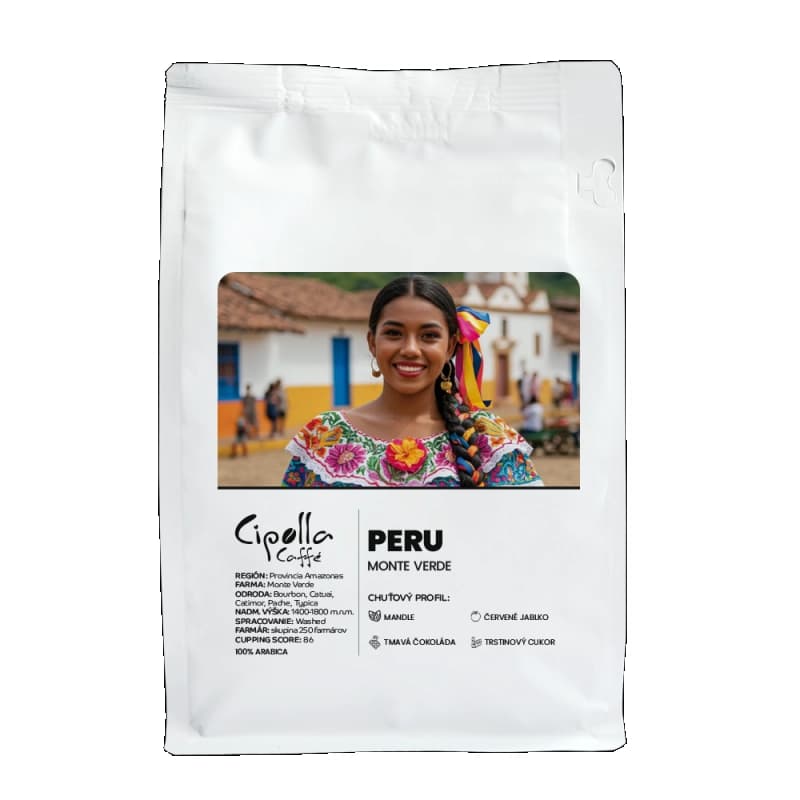
A coffee with notes of almonds, red apple, dark chocolate, and cane sugar.
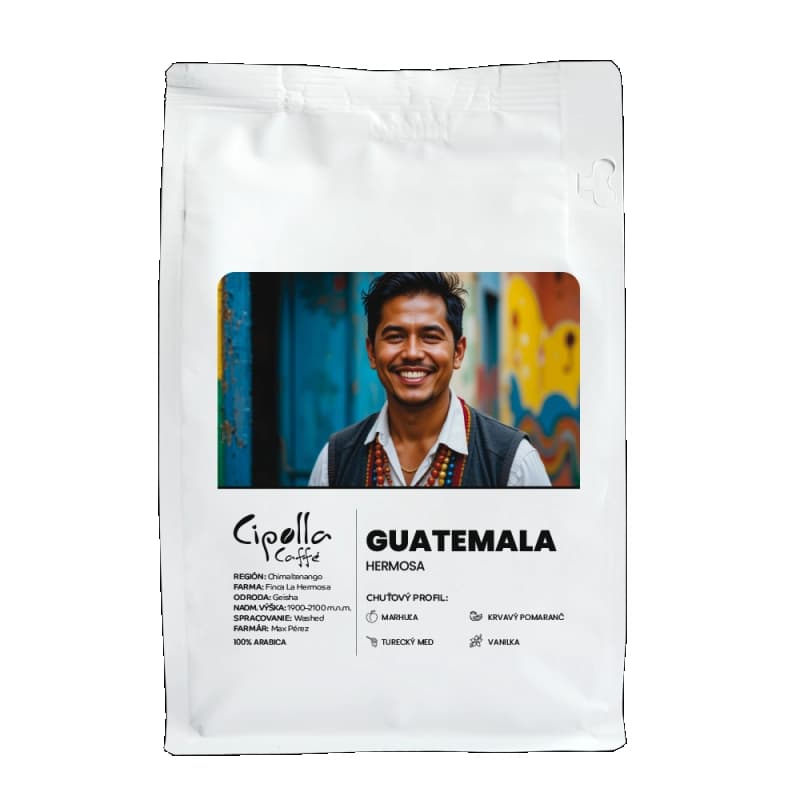
A Guatemalan coffee with notes of apricot, blood orange, and a delicate floral finish.
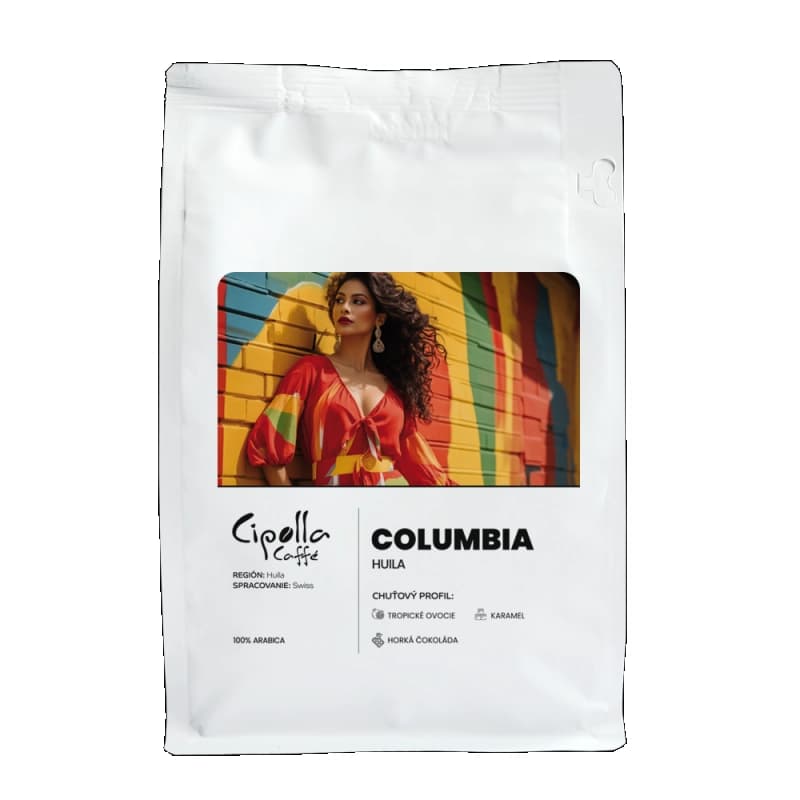
A decaf coffee with a clean profile and pleasant sweetness.