
Brazil: A Coffee Superpower with a Sweet Heart
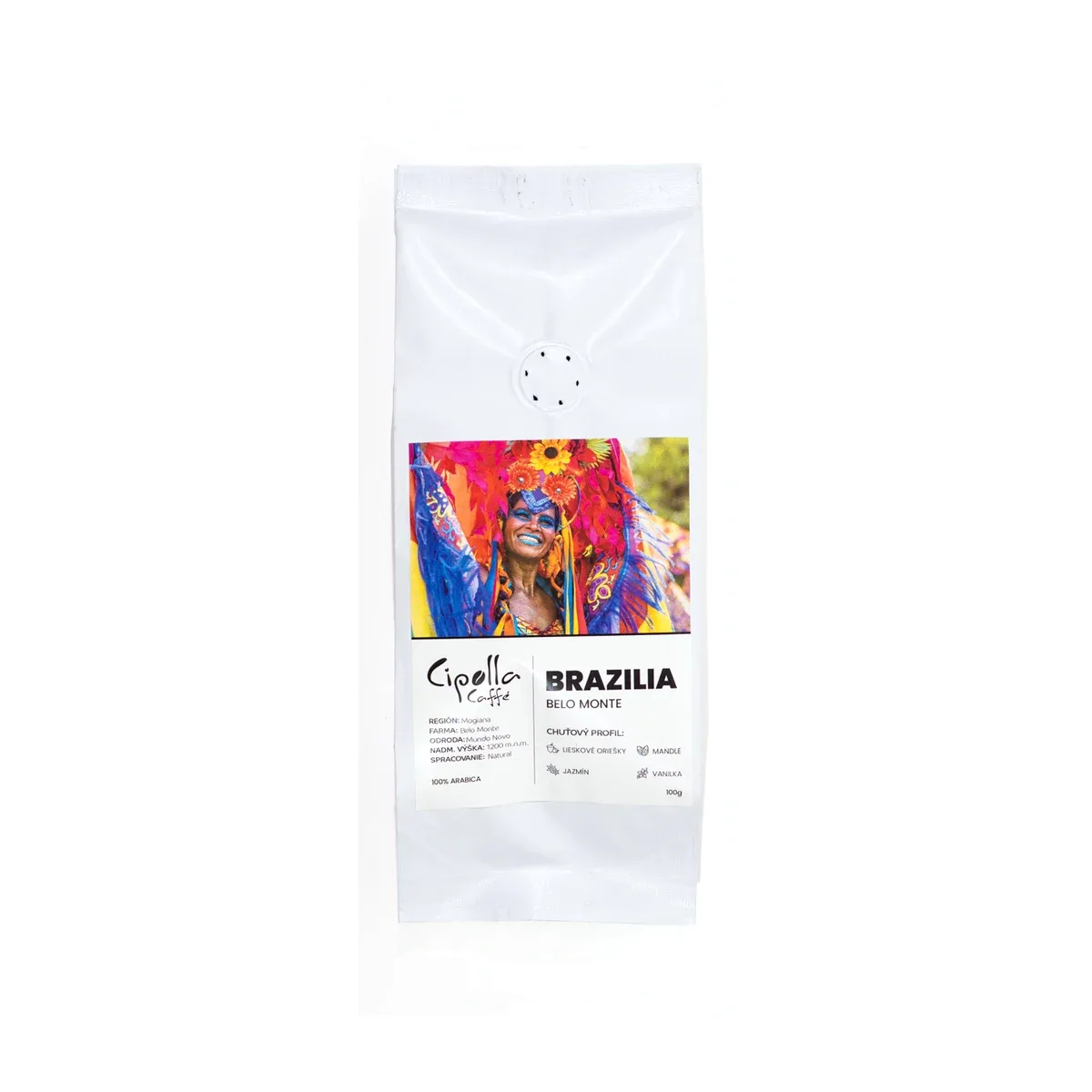
Brazil is the world's largest coffee producer, and for most espresso blends it provides the sweet, nutty backbone. In our lineup it's represented by Belo Monte from the Mogiana region — a natural-processed Arabica of the Mundo Novo variety that we roast fresh in Banská Bystrica.
The coffee belt · Brazil
In a cup of Brazilian coffee, expect vanilla, hazelnuts and almonds with a delicate floral hint of jasmine — a sweet, smooth coffee with hardly any acidity.
We recommend Brazilian coffees above all for espresso and the moka pot — the low acidity and full body deliver a thick crema and a sweet, chocolate-nutty finish. Belo Monte also works beautifully in a bean-to-cup machine and in milk drinks, where its sweetness really shines. For light filter brews, reach for our African coffees instead.
The coffees we roast from here
What Brazil tastes like
Coffee arrived in Brazil in 1727 — according to tradition, it was brought by officer Francisco de Melo Palheta, reputedly with seeds hidden in a bouquet — and the country has since grown into the world's largest coffee producer, a position it has held continuously since the 19th century. Brazilian coffee has shaped the entire industry: the vast plantations of the southeastern states, ports like Santos that ship the beans all over the world, and the very idea of what espresso should taste like. When people say “classic coffee flavor,” most of them picture the Brazilian profile — sweet, nutty and chocolatey, with low acidity and a full body.
Compared with the Andean countries, Brazilian coffee grows at fairly low altitudes — on vast highland plateaus rather than steep mountain slopes. Mild temperatures, alternating dry and rainy seasons and the flat terrain help the cherries ripen evenly, and in places even allow mechanized harvesting, which is a rarity in the coffee world. Our Brazilia Belo Monte ripens at around 1,200 m above sea level in the Mogiana region, one of the traditional growing areas on the border between the states of São Paulo and Minas Gerais.
In the cup, Brazilian coffee is a synonym for approachability. The typical profile is built on hazelnuts, almonds, chocolate and caramel, with a full body and very low acidity. That's exactly why it forms the base of most espresso blends around the world — it gives them body, sweetness and a thick crema. Brazilian coffee beans are also the perfect gateway into specialty coffee for anyone who hasn't warmed to the brighter African coffees yet: the taste feels familiar, but reveals a surprising number of layers when you drink it attentively.
Natural processing dominates here: after harvest, whole cherries are dried in the sun and the beans soak up sugars from the fruit. The dry harvest season makes Brazil the ideal home for this oldest method of coffee processing — the result is a sweeter cup with a fuller body and a soft, rounded acidity. That's exactly how our Belo Monte is made: the Mundo Novo variety grown in Mogiana is sun-dried as whole cherries after harvest, just as Brazilians have done for centuries.
Brazil's flat plantations make possible something rare in the coffee world — part of the harvest is picked by machine, while on the steep slopes of the Andes or Ethiopia, picking is done entirely by hand. And Brazil has been the world's largest coffee producer continuously since the 19th century.
Regions and farms
From Brazil's growing areas, we carry the Mogiana region — a historic coffee belt named after the former Mogiana railway, which opened the local plantations to the world in the 19th century. The region is known for balanced, sweet coffees with a nutty character, and it's where our natural-processed Arabica Belo Monte comes from, grown on the farm of the same name.
Belo Monte
- Variety
- Mundo Novo
- Altitude
- 1,200 m a.s.l.
- Processing
- Natural
The Belo Monte farm lies in the Mogiana region, one of Brazil's traditional coffee-growing areas. After the harvest, the Mundo Novo beans are processed by the natural method — whole cherries are dried in the sun, as has been the custom in Brazil for centuries.

From green bean to your cup
We roast coffees from across the coffee belt in our own roastery in Banská Bystrica and ship them all over Slovakia. And if you want to get more out of every cup, come try your hand at brewing in our Barista Academy.
Where to go next on the map
Click any dot to open the story of another origin country — the number in the dot tells you how many of its coffees we’re roasting right now.
What you ask us
What does Brazilian coffee taste like?+
Sweet, nutty and chocolatey, with a full body and very low acidity. It's the most approachable coffee profile there is — which is why it forms the base of most espresso blends in the world. Our Brazilia Belo Monte adds notes of vanilla, jasmine, hazelnuts and almonds.
What makes the Mogiana region special?+
Mogiana is a traditional growing area on the border between the states of São Paulo and Minas Gerais, named after a historic railway. It stands out for balanced, sweet coffees with a nutty-chocolatey character. Our Belo Monte ripens here at around 1,200 m above sea level.
Is Brazilian coffee acidic?+
No — it's among the least acidic coffees of all. The lower altitude and natural processing give it a soft, rounded taste without pronounced acidity. If brighter coffees haven't been your thing, Brazilian coffee beans are the ideal choice.
Is Brazilian coffee a good fit for a bean-to-cup machine?+
Yes, it's one of the best choices. The low acidity and chocolate-nutty profile work in espresso as well as in milk drinks like cappuccino or flat white. We roast Belo Monte so that it gives a thick crema and a sweet finish in a bean-to-cup machine.