
Nicaragua – Coffee from the Land of Lakes and Volcanoes
On Nicaragua's fertile volcanic highlands, coffee ripens slowly, in the shade of trees and in the hands of family farms. The result is a soft, sweet cup with peach, apricot, and milk chocolate — a coffee for the whole day.
The coffee belt · Nicaragua
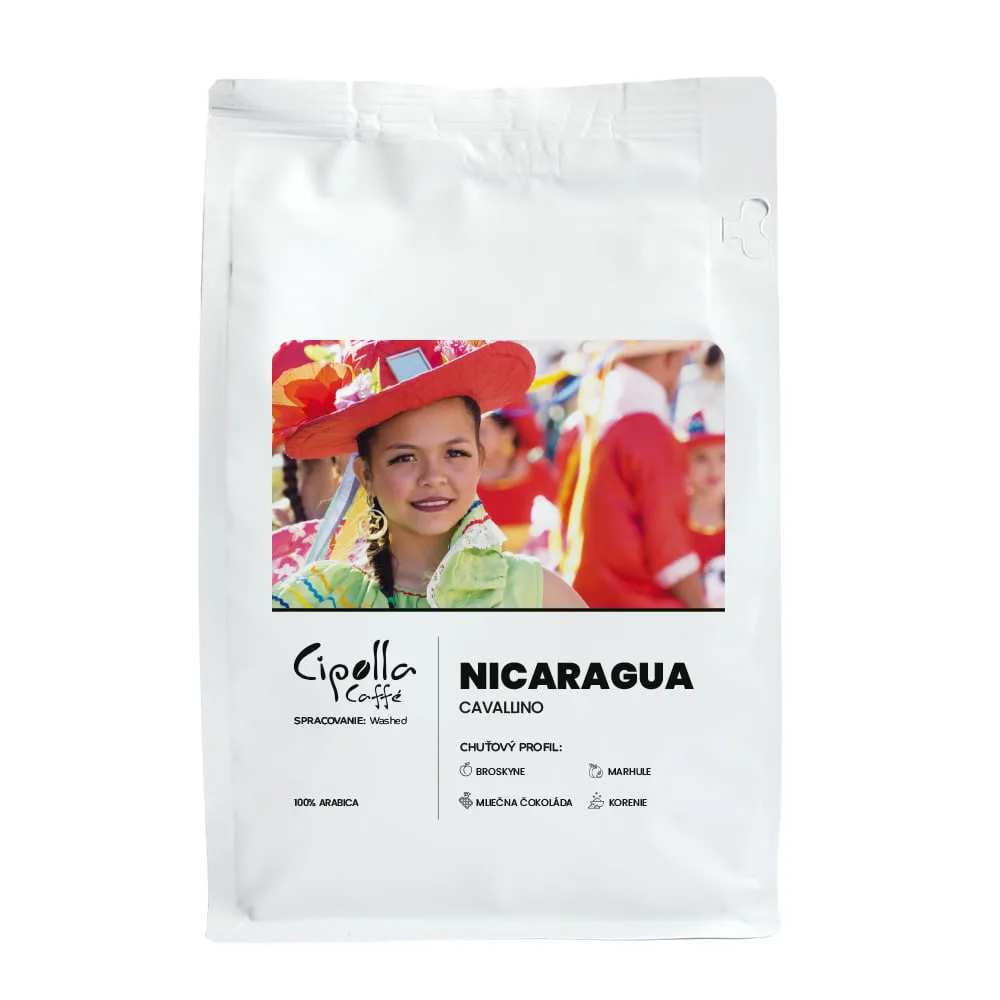
Expect peach and apricot over a milk chocolate base, with a gentle spicy finish.
Nicaragua Cavallino is a versatile coffee — you can brew it as espresso or filter. In espresso, milk chocolate and spice take the lead and the coffee takes milk well; in filter, the peach and apricot fruit opens up. The medium roast keeps both paths in balance.
The coffees we roast from here
What Nicaragua tastes like
Coffee was brought to Nicaragua by Catholic missionaries as early as the late eighteenth century, and in the nineteenth it became one of the country's mainstays. History has not been gentle with it — growers were tested by civil conflicts, hurricanes, and price swings, yet the coffee families on the highlands always replanted what the storms took. Perhaps that is why Nicaraguan coffee has a reputation as a calm, honest cup: it rests on the experience of generations of small family farms and cooperatives, not on big plantations.
The coffee trees grow on volcanic highlands, where fertile soil and a mild climate create nearly ideal conditions. Much of the coffee ripens in the shade of native trees — more slowly, but with fuller sweetness; shade growing also protects the soil and the birdlife. Nicaraguan coffee is graded by altitude, and the SHG designation, Strictly High Grown, belongs to beans from the highest elevations, which tend to be the densest and richest in flavor.
In flavor, coffee from Nicaragua is soft and approachable: peach and apricot lean on milk chocolate, with gentle spice appearing in the background. The acidity is lower and rounded, the body medium to full. It is a coffee that neither irritates nor bores — suited to all-day drinking, for espresso and filter alike. If you like Central American sweetness without pronounced acidity and are looking for a bean that handles a morning espresso as well as an afternoon filter, Nicaraguan coffee beans will be exactly your cup.
Processing is mostly washed. After hand picking, the cherries are pulped and fermented — typically for 14 to 36 hours — then the beans are washed and dried. The harvest runs from December to March, as the cherries on the highlands ripen gradually. The longer fermentation gives the bean a layered character that a faster process would leave untapped. The washed path results in a clean, legible cup where both the fruit and the chocolate base stand out; we finish it with a medium roast.
Nicaragua is called the land of lakes and volcanoes — a chain of dozens of volcanic cones runs across the country, and for centuries their ash has enriched the very soil where coffee ripens today.
Regions and farms
Nicaraguan coffee is traditionally associated with the highlands in the north of the country. Our Nicaragua Cavallino carries above all an altitude-based quality designation: the SHG grade (Strictly High Grown) guarantees beans from fertile volcanic highlands where coffee ripens in the shade of trees. Behind the coffee stand family farms and cooperatives, the backbone of the country's coffee sector; the harvest runs from December to March.
Nicaragua Cavallino
- Processing
- Washed
SHG (Strictly High Grown) beans ripen in the shade of trees on Nicaragua's fertile volcanic highlands. The local coffee sector is built largely on family farms and cooperatives; the harvest runs from December to March.

From green bean to your cup
We roast coffees from across the coffee belt in our own roastery in Banská Bystrica and ship them all over Slovakia. And if you want to get more out of every cup, come try your hand at brewing in our Barista Academy.
Where to go next on the map
Click any dot to open the story of another origin country — the number in the dot tells you how many of its coffees we’re roasting right now.
What you ask us
What does coffee from Nicaragua taste like?+
Soft, sweet, and approachable. The cup combines peach and apricot with milk chocolate and gentle spice; the acidity is rounded and the body medium to full. It is a coffee for all-day drinking that works in espresso and filter alike.
What does the SHG designation mean?+
The abbreviation Strictly High Grown marks coffee from the country's highest growing elevations. Thanks to the cooler nights there, the bean ripens more slowly and is denser and richer in flavor. Our Nicaragua Cavallino carries this very grade, the highest one.
Why is coffee in Nicaragua grown in the shade of trees?+
Shade slows the ripening of the cherries, so the bean gains more sweetness and complexity. The trees also protect the soil from drying out and offer refuge to birds, so shade growing benefits both the flavor and the landscape. In Nicaragua it is the traditional approach, kept alive above all on family farms.
Is Nicaragua Cavallino good for espresso?+
Yes — as espresso it is chocolatey and spicy, with soft acidity, delicious on its own or with milk. It holds its own in filter just as well, where the peach and apricot step forward. It is one of the most versatile coffees in our lineup.