Colombia: A Balanced Classic from the Andean Slopes
Colombian coffee is among the best known in the world — balanced, sweet, and juicy at the same time. We carry five Colombian coffees: from the classic washed El Rosal through the experimental Luisa to a limited edition aged in rum barrels. All of them come from mountain farms, and we roast them fresh in Banská Bystrica.
The coffee belt · Colombia
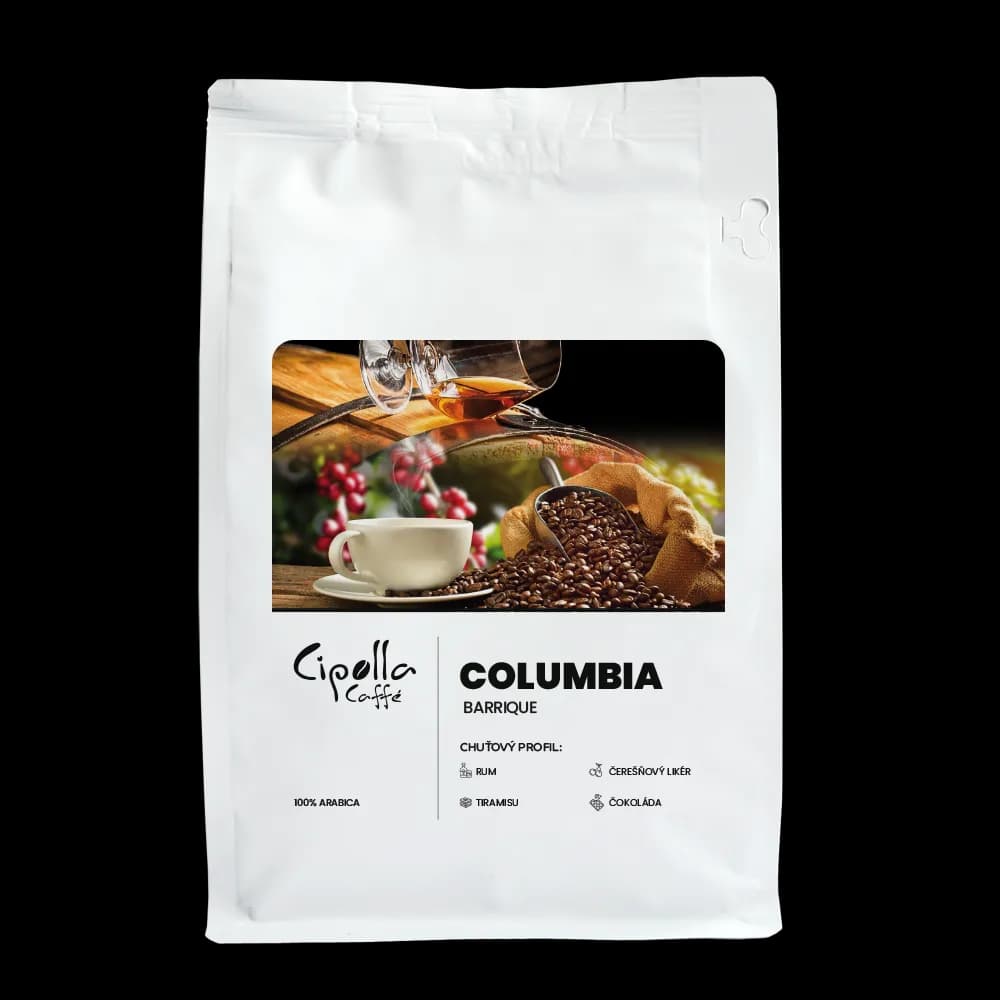
In a cup of Colombian coffee, expect milk chocolate, caramel, and jam, joined by juicy fruit — plum, red grape, or lime — and, in the limited-edition Barrique, notes of rum and cherry liqueur as well.
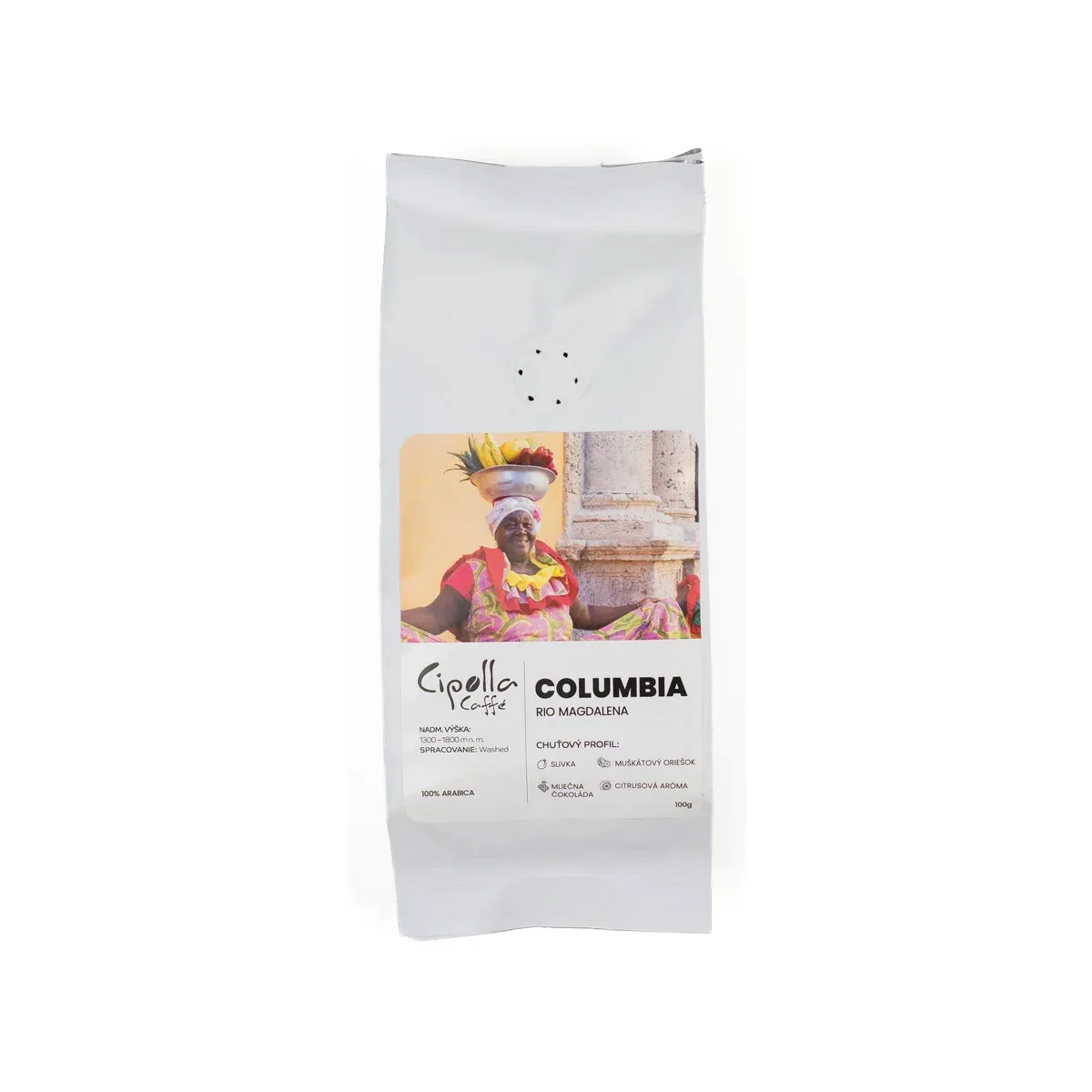
Colombian coffees are versatile — most of our lineup brews equally well as espresso and as filter. For espresso and milk drinks, reach for El Rosal or Barrique; in filter, the fruity Luisa or Rio Magdalena shines — with the latter, try a coarser grind and a ratio of about 65 g of coffee per liter of water, and the plum and citrus come through beautifully. Huila Decaf handles both and suits the late evening as well.
The coffees we roast from here
What Colombia tastes like
Coffee came to Colombia in the 18th century and gradually became a pillar of both the economy and the national identity. The country ranks among the world's largest producers of Arabica, and its coffee has built a reputation for reliable quality — thanks in part to the national growers' federation, which has overseen standards for decades, and to the figure of farmer Juan Valdez, who made Colombian coffee famous abroad. Unlike in many countries, small family farms still prevail here, with cherries picked exclusively by hand, often on slopes so steep that the only way across them is on foot.
Three ranges of the Andes run through Colombia, and it is their slopes that give the local coffee its character. Volcanic soil, high altitude, and an equatorial climate without distinct seasons make something exceptional possible: in different parts of the country, harvesting goes on practically all year round, in many places even in two crops. Our Colombian coffees ripen at altitudes of roughly 1,300 to 1,800 m above sea level — El Rosal at 1,650 m and Luisa as high as 1,720 m. Cool nights at high altitude slow the ripening of the cherries, and the bean gains density, sweetness, and complexity as a result.
In terms of taste, Colombian coffee is a textbook of balance. The typical profile joins caramel and milk chocolate with juicy fruit — plum, grape, citrus — and a fresh yet non-aggressive acidity. It is a coffee that tastes just as good to beginners as to seasoned drinkers, which is why we often recommend it as the very first specialty coffee to try. Colombian coffee beans handle both espresso and filter without losing its character in either, and they work reliably in milk drinks too.
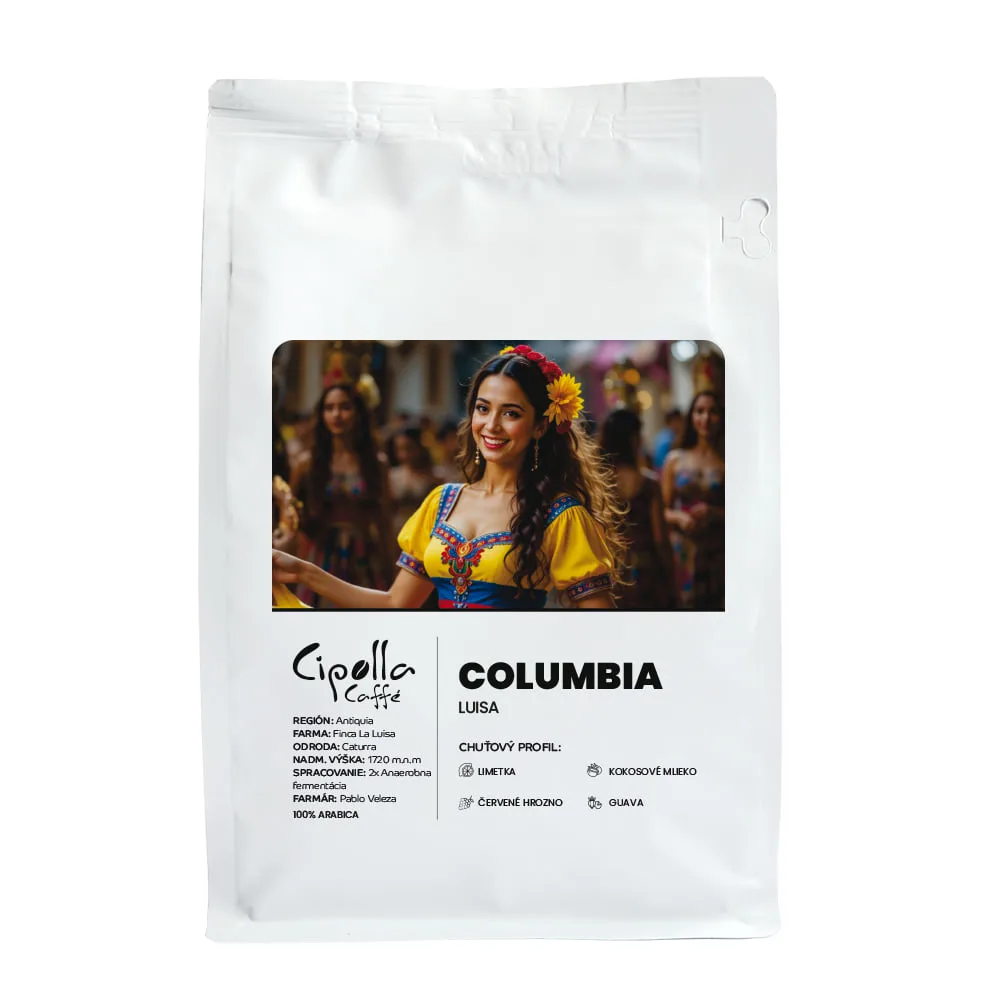
The pillar of Colombian coffee's reputation is the washed method: the cherries are depulped and the beans ferment in water, which washes away the remnants of the fruit. The result is a clean, transparent profile with clearly separated notes. Yet Colombian farmers are also among the pioneers of experimentation — our Columbia Luisa from the Finca La Luisa farm goes through a double anaerobic fermentation without access to oxygen, and Columbia Barrique ages for about three months in oak barrels that once held Caribbean rum, while the finished coffee remains completely alcohol-free.
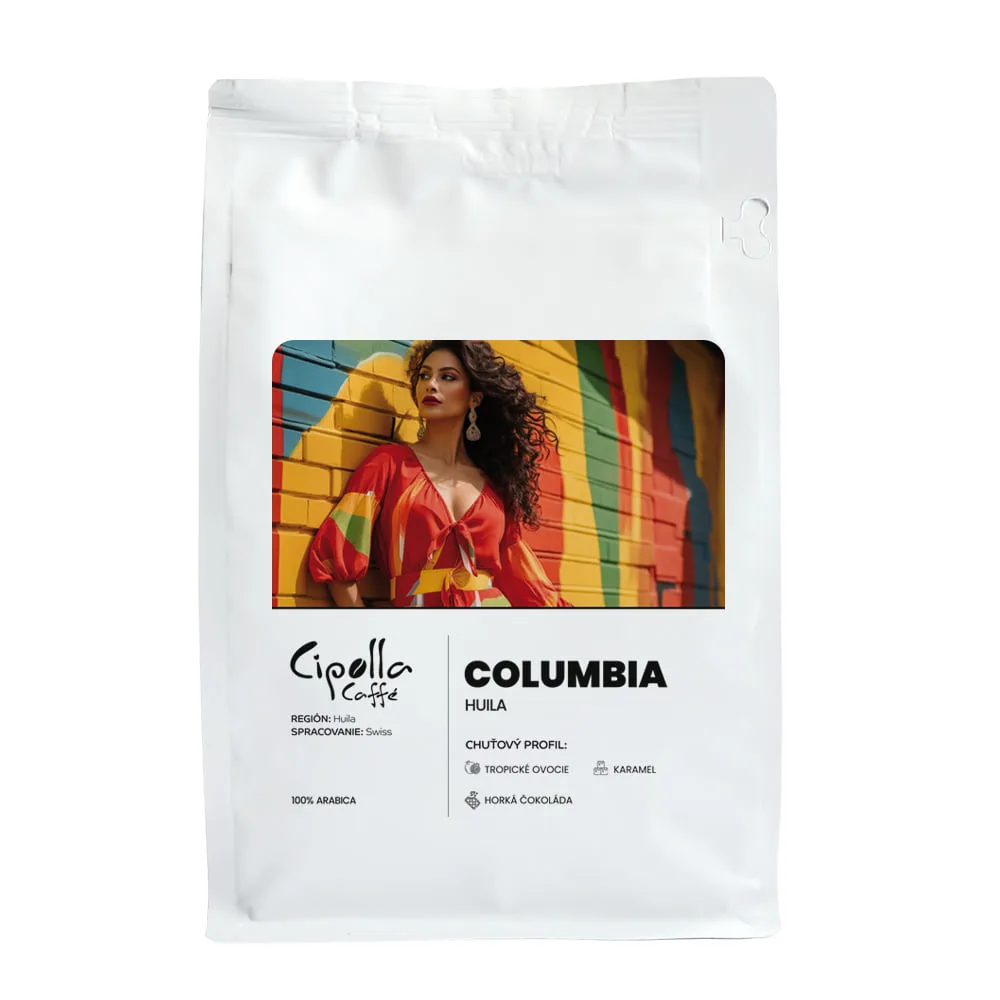
Colombia is also a country where top-class decaffeinated coffee is made. Our Columbia Huila Decaf is decaffeinated using the Swiss Water method — the caffeine is removed with pure water, gently and without chemicals, so the bean keeps the original character of the Huila department. Colombian coffee thus covers the whole day: from a morning espresso through an afternoon filter to a cup for the late evening. That is also why Colombia holds the most coffees in our lineup of all the growing countries.
Colombia is the only major coffee country that has been represented around the world for decades by a fictional farmer — Juan Valdez and his mule were created back in the late 1950s and remain the symbol of Colombian coffee to this day.
Regions and farms
Our Colombian coffees come from two regions. From the Huila department in the south of the country we have the washed coffees El Rosal and Rio Magdalena from the basin of the river of the same name, as well as the decaffeinated Huila Decaf — Huila combines high altitude with an equatorial climate and ranks among Colombia's most respected coffee areas. From mountainous Antioquia comes the experimental Luisa from the Finca La Luisa farm of farmer Pablo Velez.
Columbia Huila Decaf
- Processing
- Swiss Water (decaf.)
The Huila department ranks among Colombia's most acclaimed coffee regions, combining high altitude with an equatorial climate. The caffeine is removed from the beans gently, so the coffee keeps its original character — yet it also suits the late evening.
Finca La Luisa
- Farmer
- Pablo Veleza
- Variety
- Caturra
- Altitude
- 1,720 m a.s.l.
- Processing
- 2× anaerobic fermentation
At Finca La Luisa in the Antioquia region, farmer Pablo Veleza grows his coffee. Colombian coffee has traditionally been grown on small family farms in the volcanic soil of mountain slopes; on top of that, Luisa undergoes an unconventional double anaerobic fermentation that gives it its specialty character.
Columbia Rio Magdalena
- Altitude
- 1,300–1,800 m a.s.l.
- Processing
- Washed
This coffee takes its name from the Magdalena, Colombia's greatest river, which flows through the heart of the country and brings life to the coffee farms of the Huila department. On the steep Andean slopes, the cherries are picked by hand and dried on raised beds or patios, depending on the weather.
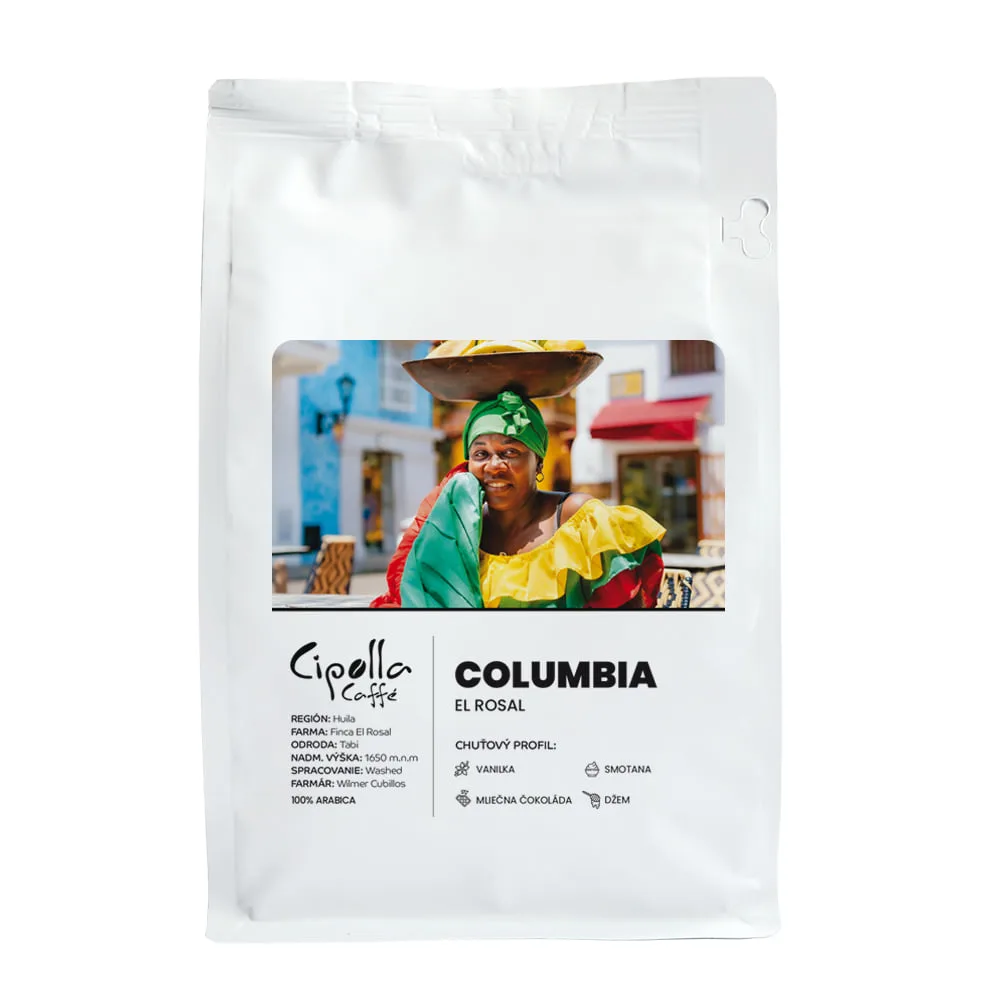
Finca El Rosal
- Farmer
- Wilmer Cubillos
- Variety
- Tabi
- Altitude
- 1,650 m a.s.l.
- Processing
- Washed
Finca El Rosal, run by farmer Wilmer Cubillos, lies in the Huila department, one of Colombia's most acclaimed coffee regions. Beans of the Tabi variety ripen here in volcanic soil at around 1,650 m a.s.l. and are processed using the classic washed method.
From green bean to your cup
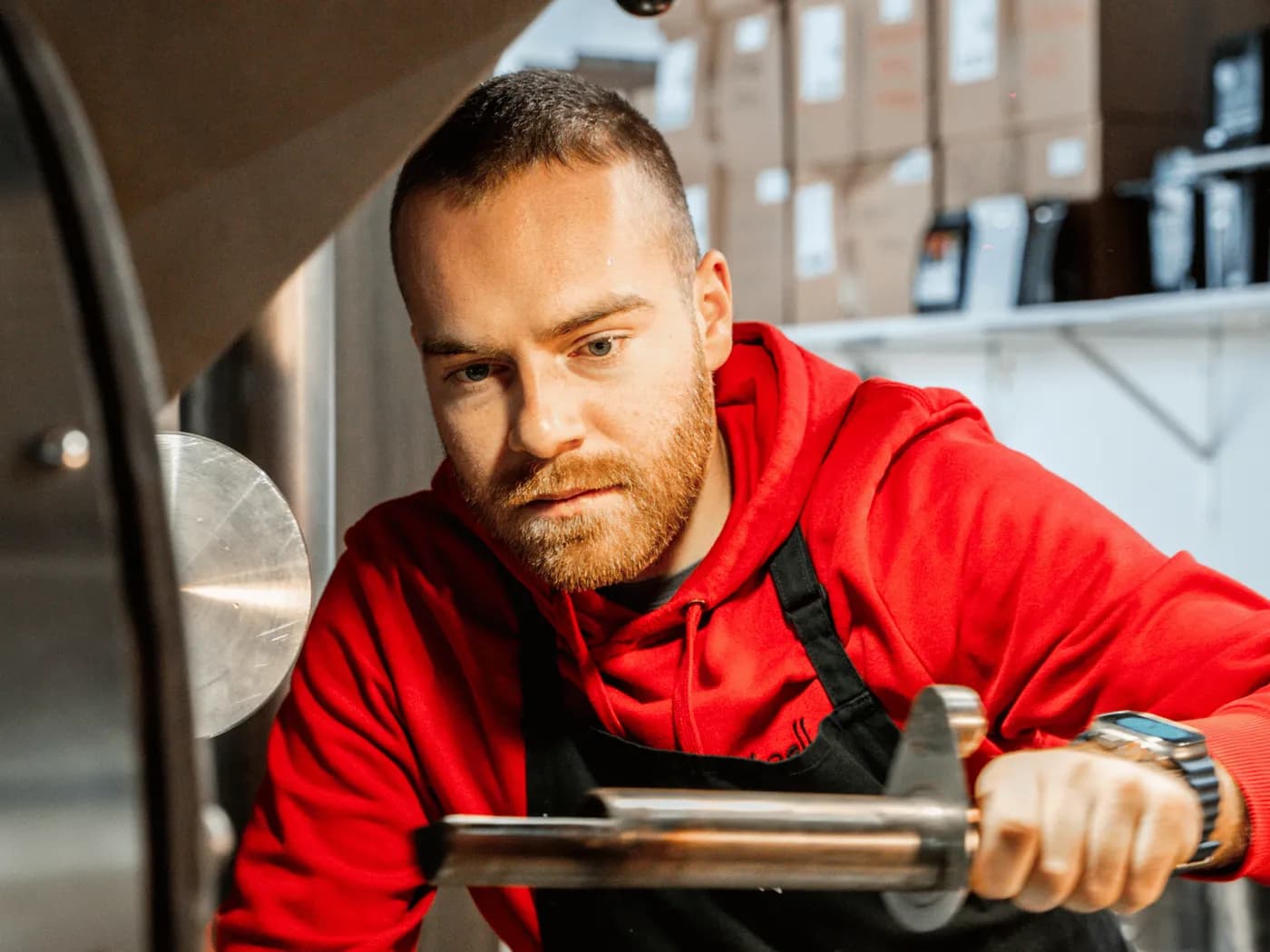
We roast coffees from across the coffee belt in our own roastery in Banská Bystrica and ship them all over Slovakia. And if you want to get more out of every cup, come try your hand at brewing in our Barista Academy.
Where to go next on the map
Click any dot to open the story of another origin country — the number in the dot tells you how many of its coffees we’re roasting right now.
What you ask us
What does coffee from Colombia taste like?+
Balanced and juicy: caramel and milk chocolate meet fruity notes and a fresh, pleasant acidity. Thanks to this balance, Colombian coffee is often recommended as the ideal entry into the world of specialty coffee. It handles both espresso and filter.
What is the Huila region known for?+
Huila in southern Colombia ranks among the country's most respected coffee areas. It combines high altitude with volcanic soil and an equatorial climate, complemented by the fertile basin of the Magdalena River. From Huila we have the coffees El Rosal and Rio Magdalena, and the decaffeinated Huila Decaf.
What is coffee aged in rum barrels?+
After harvest and washing, Columbia Barrique rests for about three months in oak barrels that spent long years holding Caribbean rum. The bean takes on aromas of rum, vanilla, and liqueur from the wood, yet the finished coffee remains completely alcohol-free. It is a craft-intensive process borrowed from the world of wine and rum.
What is decaf coffee from Colombia like?+
Our Columbia Huila Decaf is decaffeinated using the Swiss Water method — the caffeine is removed with pure water, without chemicals. The bean keeps its caramel-chocolate character with notes of tropical fruit, so you are not missing out on taste. Feel free to enjoy it late in the evening, too.