El Salvador: A Small Country of Great Bourbons
El Salvador is the smallest country in Central America, yet in coffee it plays in the top league — the Pacas and Pacamara varieties were born right here. Our El Cocal coffee is grown on the volcanic slopes of the Apaneca Ilamatepec region, and natural processing gives it a honeyed sweetness. It scored 86 out of 100 points at cupping.
The coffee belt · El Salvador
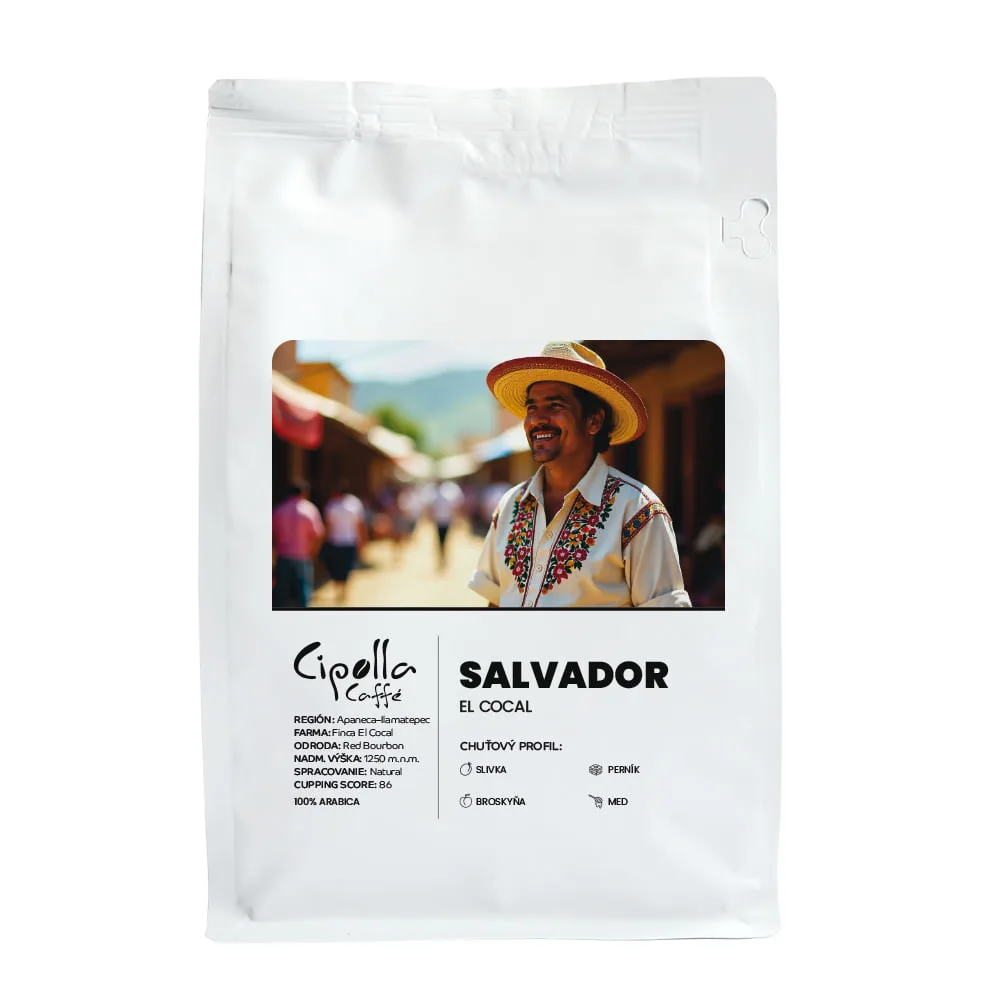
Expect honey, peach, and plum in a cup of Salvadoran coffee, rounded out by a warm note of gingerbread — a sweet profile with a soft, rounded acidity.
We recommend El Cocal for both espresso and filter. Espresso deepens the honeyed sweetness and gingerbread spice, while filter brings out the juicy peach and plum. Thanks to natural processing and lower acidity, it also tastes excellent in milk drinks.
The coffees we roast from here
What El Salvador tastes like
For a long time, coffee was everything to El Salvador — in the 19th and 20th centuries it formed the backbone of the economy, and the small country ranked among the world's notable producers. The civil war of the 1980s hit coffee growing hard, yet precisely because of it, something precious survived in El Salvador: while farmers elsewhere switched en masse to modern resistant varieties, the old Bourbon orchards here were left standing. Today, Salvadoran coffee is synonymous with a traditional, artisanal approach — coffee from El Salvador ranks among the most interesting Central America has to offer.
A chain of volcanoes runs through the country, and practically all Salvadoran coffee grows on their slopes. The volcanic soil is rich in minerals, shaded plantations protect the shrubs from the harsh sun, and the altitude gives the beans density and sweetness. Our Salvador El Cocal ripens at 1,250 m above sea level in the Apaneca Ilamatepec region — a volcanic mountain range in the west of the country that ranks among El Salvador's most important growing areas, its name joining the Apaneca range with the Ilamatepec volcano — the original name of Santa Ana, El Salvador's highest volcano.
El Salvador is the home of the Pacas variety — a natural mutation of Bourbon discovered right here — and breeders later crossed it with the Maragogipe variety to create the famous large-beaned Pacamara. Our El Cocal builds on the classics: the Red Bourbon variety gives sweet, rounded cups with a honeyed character. The typical Salvadoran profile is gentle and sweet, with notes of honey, stone fruit, and caramel, a mild acidity, and a creamy body — a coffee that offends no one and surprises many with its depth.
The harvest takes place in the drier months, and the cherries are processed by several methods — El Cocal goes the natural route: whole cherries are dried in the sun while the bean soaks up sugars from the fruit. That's why you'll find honey, peach, and plum in the cup instead of sharp citrus notes. Natural processing combined with the Red Bourbon variety earned the coffee 86 points at cupping — an above-average rating that places it among specialty coffees.
In El Salvador, coffee was called “el grano de oro” — the golden grain. In its heyday it accounted for most of the country's exports, and coffee money built theaters and railroads.
Regions and farms
Our Salvadoran coffee comes from the Apaneca Ilamatepec region in the west of the country — a volcanic mountain range that ranks among El Salvador's most acclaimed growing areas. Here, at 1,250 m above sea level on the El Cocal farm, the Red Bourbon variety ripens and is processed by the natural method, with whole cherries dried in the sun.
El Cocal
- Variety
- Red Bourbon
- Altitude
- 1,250 m a.s.l.
- Processing
- Natural
- Cupping score
- 86 / 100
The El Cocal farm lies on El Salvador's volcanic slopes, where volcanic soil and shaded plantations create ideal conditions for coffee. The traditional Red Bourbon variety is grown here; El Salvador is also the birthplace of the Pacas variety — a natural mutation of Bourbon discovered right in this country.
From green bean to your cup
We roast coffees from across the coffee belt in our own roastery in Banská Bystrica and ship them all over Slovakia. And if you want to get more out of every cup, come try your hand at brewing in our Barista Academy.
Where to go next on the map
Click any dot to open the story of another origin country — the number in the dot tells you how many of its coffees we’re roasting right now.
What you ask us
What does coffee from El Salvador taste like?+
Sweet and gentle: typical notes are honey, stone fruit, and caramel, with a mild acidity and a creamy body. Our El Cocal adds peach, plum, and gingerbread. It scored 86 out of 100 points at cupping.
What is the Pacas variety?+
Pacas is a natural mutation of the Bourbon variety, discovered in the mid-20th century in El Salvador on the Pacas family farm. The shrub is shorter and more compact, but keeps Bourbon's sweetness in the cup. By crossing Pacas with the Maragogipe variety, the famous large-beaned Pacamara was later created in El Salvador.
What makes the Apaneca Ilamatepec region special?+
It is a volcanic mountain range in western El Salvador; the name joins the Apaneca range with the Ilamatepec volcano, the original name of Santa Ana, El Salvador's highest volcano. Mineral-rich volcanic soil and shaded plantations create ideal conditions for coffee here. This is where our naturally processed El Cocal comes from, grown on the farm of the same name.
What does natural processing mean for El Cocal coffee?+
After harvest, whole cherries are dried in the sun, and over the weeks the bean soaks up sugars from the fruit. The result is a sweeter, fruitier cup with a fuller body — with El Cocal, honey, peach, and plum. It is the oldest method of processing coffee.