
Kenya – Juicy Coffee from the Foot of Mount Kenya
Kenyan coffee is among the most distinctive in the world: juicy, bright, and fruity. Our beans come from the Nyeri and Kirinyaga regions at the foot of Mount Kenya, and we roast them fresh in Banská Bystrica.
The coffee belt · Kenya
In the cup, Kenyan coffee plays with fresh notes of apple, cranberry, and green tea, balanced by honey, caramel, and dark chocolate.
We recommend Kenyan coffee above all for filter brewing, where the juicy acidity and fruity notes unfold fully. Thanks to its balanced profile, Kenya Kiri also makes an excellent espresso – its honeyed sweetness keeps the fruit nicely in check. In a filter or an AeroPress, give it a coarser grind and water at 92 to 94 °C. If you pull an espresso from Tambaya Nyeri, expect a bright, distinctly fruity cup.
The coffees we roast from here
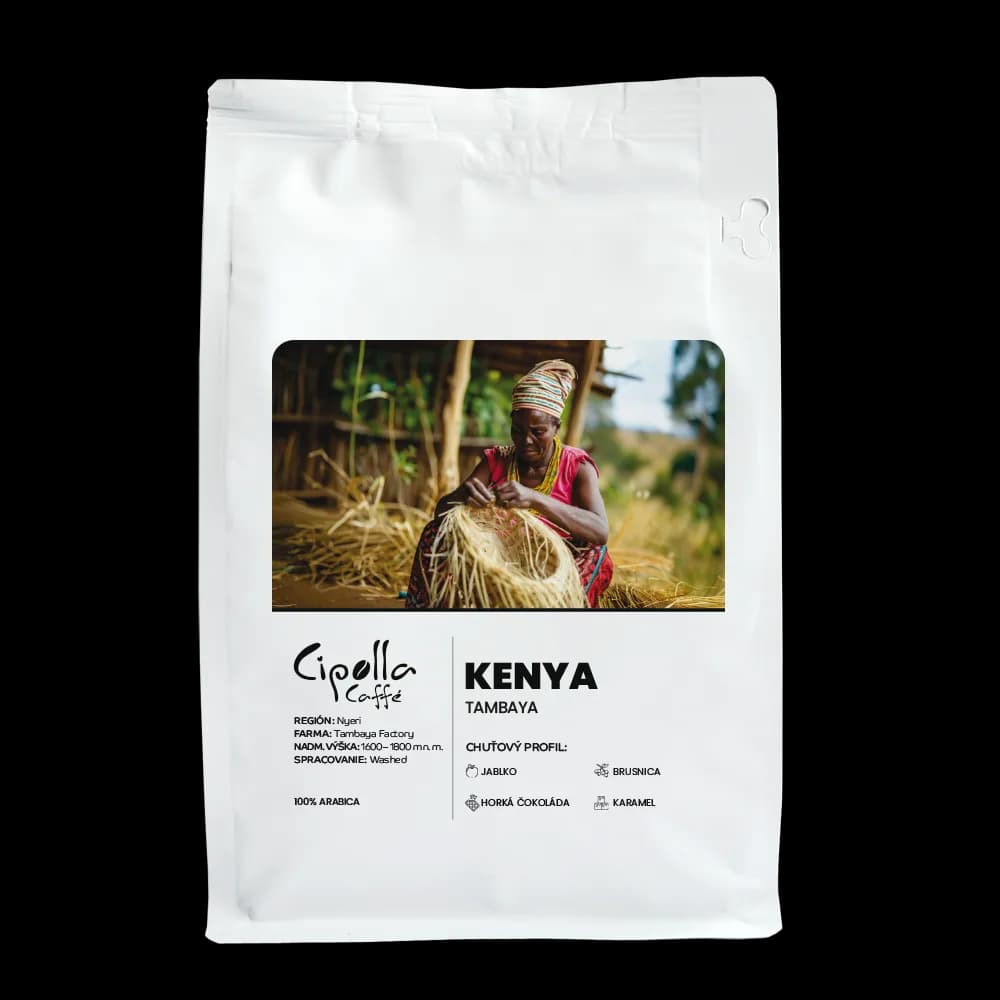
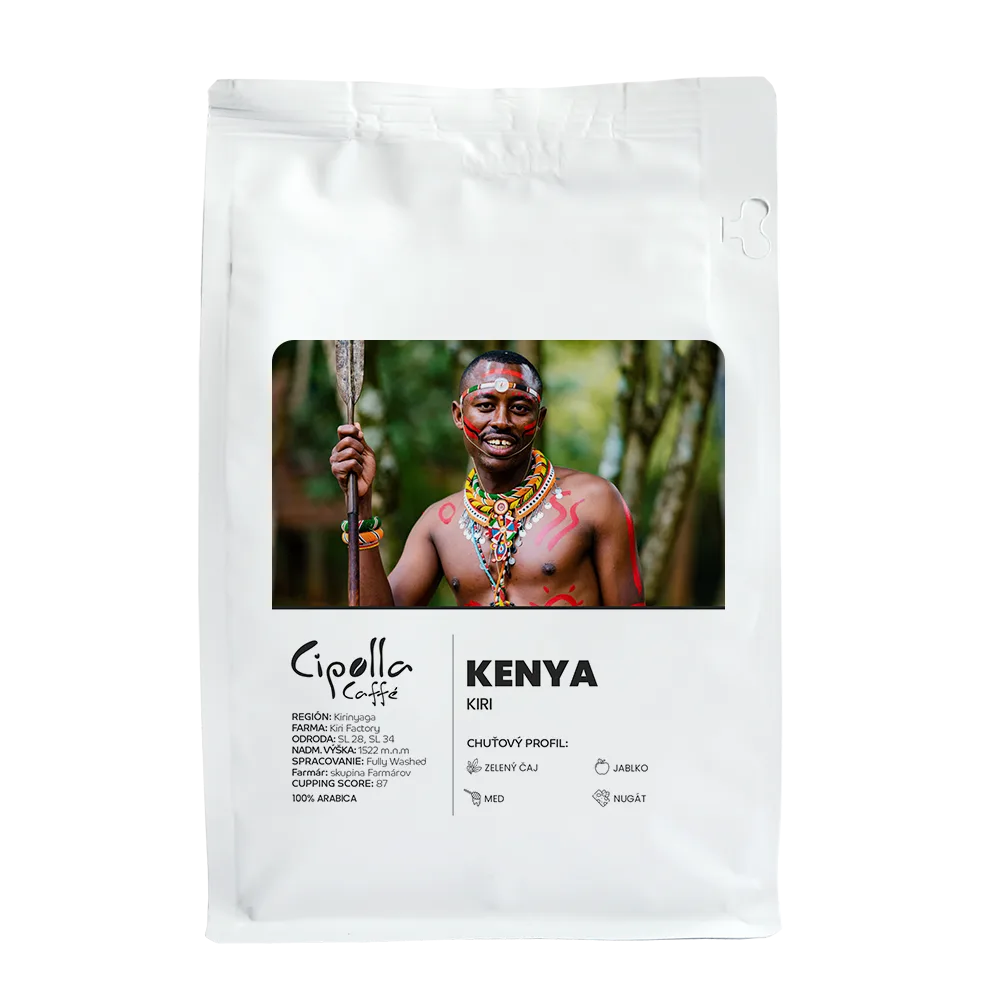
What Kenya tastes like
Coffee arrived in Kenya rather late, only at the end of the nineteenth century, yet the country quickly made up for the centuries-long head start of others. It built one of the most sophisticated quality-control systems in the coffee world – beans are sorted by size and quality into grades, and the best lots are sold at auctions in Nairobi, where buyers from all over the world compete for them. Kenyan coffee thus became a synonym for precision, and many roasters consider it the pinnacle of what washed Arabica can offer.
The heart of coffee growing is the central highlands around Mount Kenya. Coffee trees grow here in nutrient-rich red volcanic soil, at altitudes roughly from 1,500 to 2,000 m above sea level. The equatorial sun and cool nights at high altitude make the cherries ripen slowly, so the bean gains density and concentrated flavor. Thanks to two rainy seasons, Kenya has two harvests a year – a main one and a smaller secondary one – so fresh beans come out of the country almost all year round.
The typical Kenyan profile is juicy and lively: black currant, citrus, and a sparkling, almost wine-like acidity. Our Kenya Tambaya Nyeri brings caramel, cranberry, dark chocolate, and apple; Kenya Kiri from the Kirinyaga region offers green tea, apple, honey, and nougat. Much of the credit goes to the SL28 and SL34 varieties, selected in the 1930s by researchers at Scott Agricultural Laboratories from dozens of trees under study – to this day they rank among the most prized Arabica varieties in the world.
Kenyan processing is a chapter of its own. Small growers bring their hand-picked cherries to shared stations known locally as factories. The beans go through the signature washed method with double fermentation and a long soak in clean water – a process that gives the coffee its famed clarity and radiant freshness. That is why Kenyan coffee beans are so often recommended to anyone who wants to understand what acidity in coffee means in the best sense of the word.
Although Kenyan coffee is among the most acclaimed in the world, Kenyans themselves traditionally drink mostly tea. The bulk of the harvest has gone to export from the very beginning, and a domestic coffee culture has only been growing on a larger scale in recent years.
Regions and farms
Our Kenyan coffees come from two neighboring regions of the central highlands. Nyeri, at the foot of Mount Kenya, ranks among the country's most respected areas – that is where our coffee from the Tambaya Factory station comes from. Kirinyaga, on the slopes of the same mountain, rivals it in quality; the Kiri Factory station processes cherries from a group of local farmers, and the coffee scored 87 points out of a hundred at cupping.
Tambaya Factory
- Altitude
- 1,600–1,800 m a.s.l.
- Processing
- Washed
The Nyeri region in Kenya's central highlands ranks among the country's finest coffee-growing areas, thanks to the red volcanic soil at the foot of Mount Kenya. Cherries from the surrounding farms are processed at the Tambaya Factory station using the washed method, which gives Kenyan coffee its signature juicy sparkle.
Kiri Factory
- Farmer
- A group of farmers
- Variety
- SL 28, SL 34
- Altitude
- 1,522 m a.s.l.
- Processing
- Fully Washed
- Cupping score
- 87 / 100
The Kiri Factory station lies in the Kirinyaga region at the foot of Mount Kenya, and its cherries are delivered by a group of local farmers. The SL 28 and SL 34 varieties ripen at 1,522 meters and are processed using the fully washed method, which gives Kenyan coffees their famed clarity and freshness.
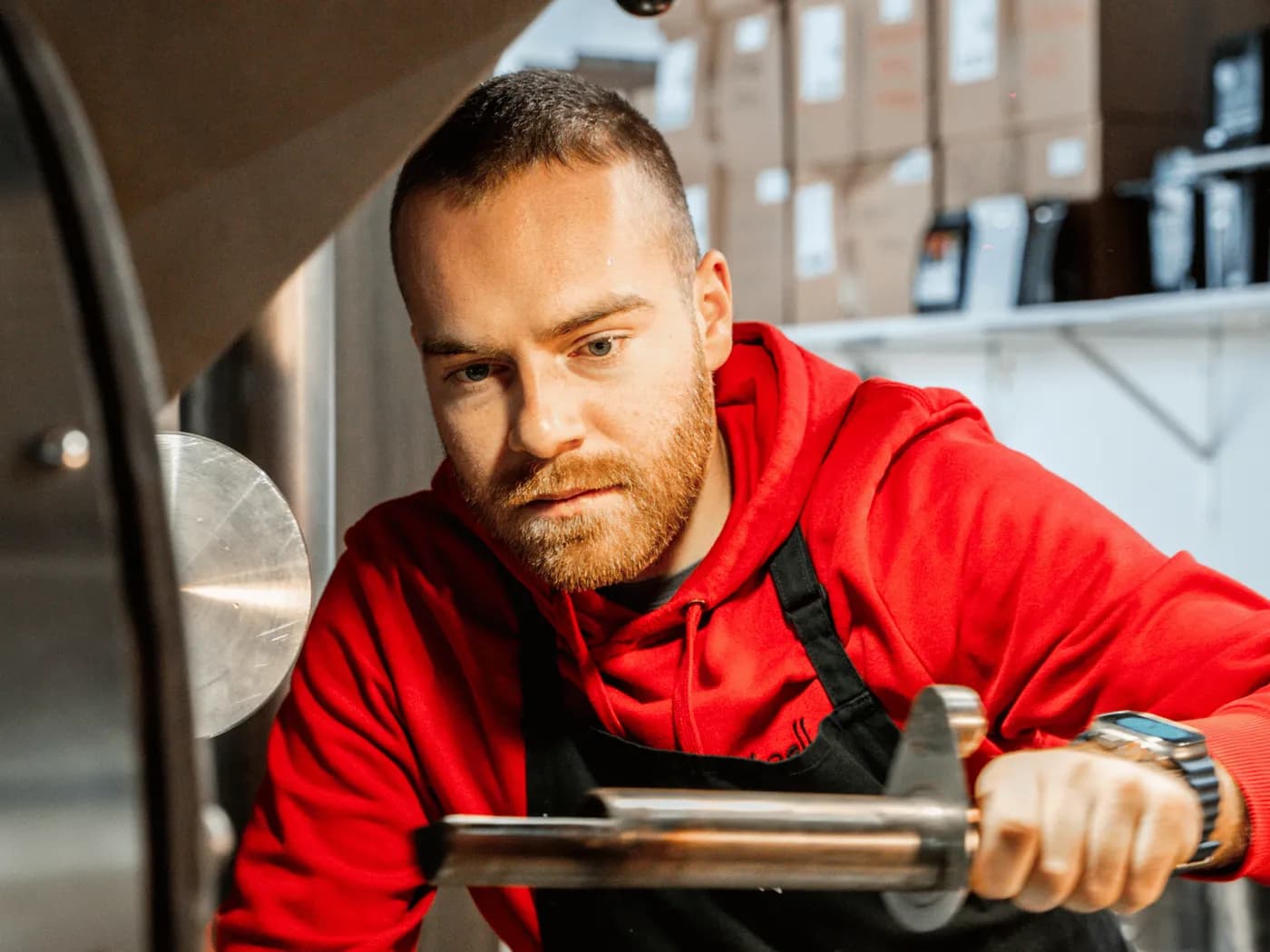
From green bean to your cup
We roast coffees from across the coffee belt in our own roastery in Banská Bystrica and ship them all over Slovakia. And if you want to get more out of every cup, come try your hand at brewing in our Barista Academy.
Where to go next on the map
Click any dot to open the story of another origin country — the number in the dot tells you how many of its coffees we’re roasting right now.
What you ask us
Is Kenyan coffee sour?+
Kenyan coffee has a pronounced acidity, but it is not an unpleasant sourness – it is closer to the juiciness of a fresh apple or currants. That liveliness is exactly why lovers of lighter roasts seek it out. If you prefer a gentler profile, reach for Kenya Kiri, where honey and nougat round off the acidity.
What is the Nyeri region known for?+
Nyeri lies in the central highlands at the foot of Mount Kenya and, thanks to its red volcanic soil, ranks among the country's best coffee areas. The famed SL28 and SL34 varieties are grown here, and the cherries are processed by the washed method with double fermentation. Our Kenya Tambaya Nyeri comes from this area.
What do the SL28 and SL34 varieties mean?+
The abbreviation SL refers to Scott Agricultural Laboratories, where these varieties were selected in the 1930s from dozens of trees under study as elite selections. To this day they rank among the most prized Arabica varieties – SL28 gives the cup the fruity acidity of black currant and apple, while SL34 adds body and resilience at high altitudes. You will find them in our Kenya Kiri from the Kirinyaga region, too.
Is Kenyan coffee suitable for espresso?+
Yes, especially Kenya Kiri, which is processed fully washed and handles both espresso and filter. In espresso, expect a bright, fruity cup with a sweet finishing touch of honey and nougat – a different experience from Italian blends, but for many drinkers exactly the revelatory one.