Ethiopia – The Land Where Coffee Was Born
Arabica comes from Ethiopia's mountain forests, and nowhere else does it taste as diverse as here. In our lineup you'll find coffees from the Nensebo and Guji regions – fruity, sweet and freshly roasted in Banská Bystrica.
The coffee belt · Ethiopia
In a cup of Ethiopian coffee, expect juicy fruit – orange, peach and forest berries – underpinned by milk chocolate, caramel and nougat.
We recommend Ethiopian coffees first and foremost for filter brewing, where the fruity notes and delicate acidity shine brightest. They work in espresso too – just expect a fresh, fruity shot rather than classic Italian bitterness. If you pull espresso at home, give these lighter-roasted beans a slightly finer grind.
The coffees we roast from here
What Ethiopia tastes like
If coffee has a true home anywhere, it is Ethiopia. The Arabica coffee tree comes from the mountain forests in the country's southwest, where it still grows wild to this day. Coffee in Ethiopia is therefore not just a trade commodity but part of everyday life – the traditional coffee ceremony, in which green beans are roasted right in front of the guests, is one of the oldest coffee rituals in the world. What's more, most Ethiopian coffee is grown in small gardens next to homes and in semi-wild forest stands, not on industrial plantations. It is this variety that makes the country an endless treasury of flavors the world is still discovering.
Ethiopian coffees ripen in some of the highest-lying growing areas in the world. Our beans from the Nensebo and Guji regions grow at altitudes of around two thousand meters, where cool nights slow down the ripening of the cherries. This gives the bean time to build up more sugars and aromatic compounds, and the resulting cup is sweeter and more complex. The country is also helped by its red, well-draining soil and the alternation of rainy and dry seasons, which naturally frames the harvest. Thousands of indigenous landrace varieties grow here – descendants of wild coffee trees you won't find anywhere else – alongside selections from the local JARC research center, bred directly from this genetic wealth.
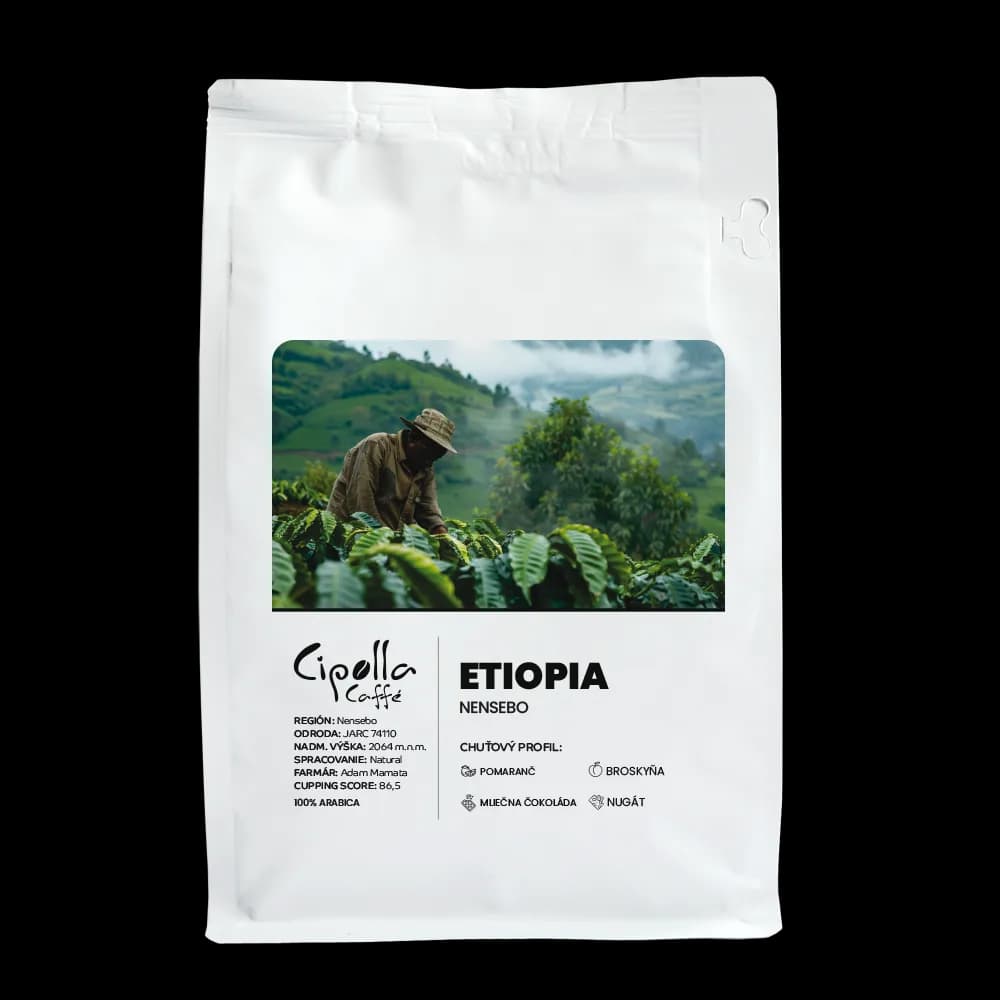
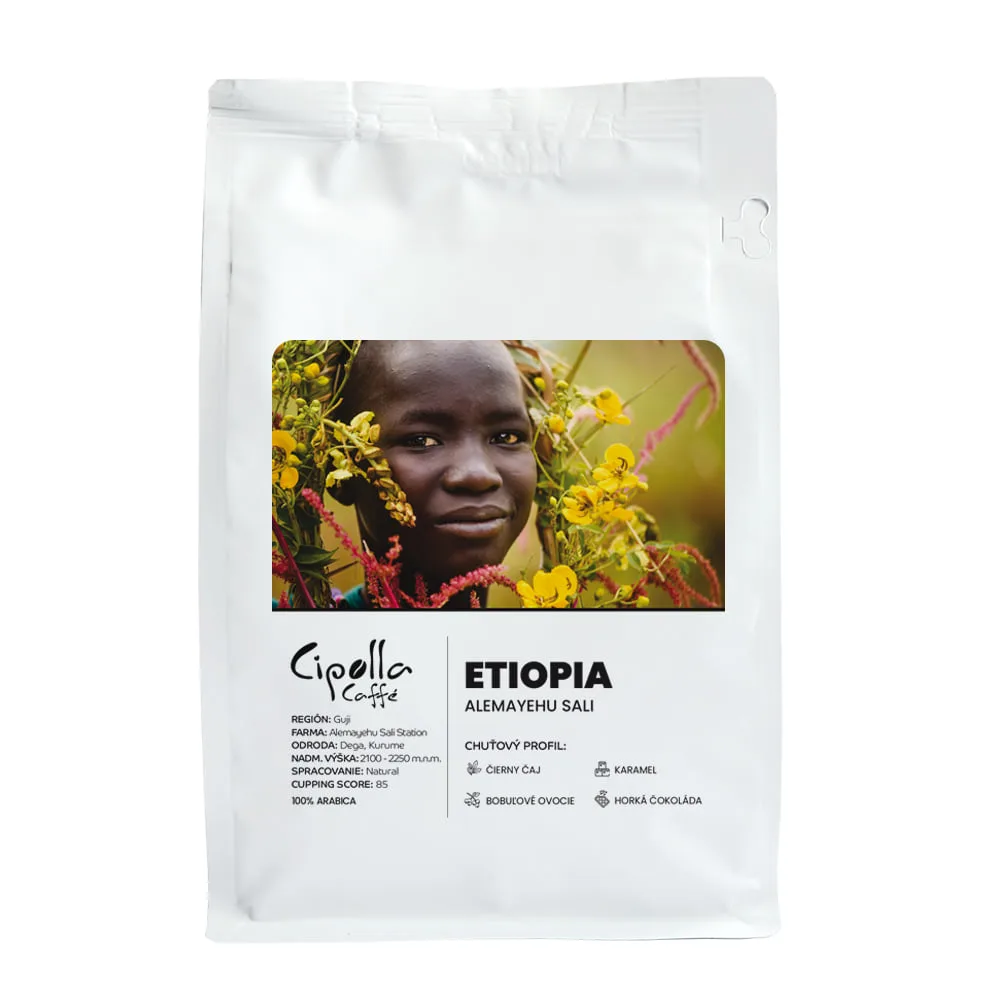
The flavor profile is the reason coffee from Ethiopia has won so many fans. Floral and citrus notes, juicy stone fruit and a sweetness reminiscent of honey or nougat are typical. Our Etiopia Nensebo from the West Arsi area offers orange, peach, milk chocolate and nougat; Etiopia Alemayehu Sali from the Guji zone is built on dark chocolate, caramel, berries and a black tea finish. Both coffees are 100% Arabica, and we roast both on the lighter side so the bean's fruity character stays front and center.
The harvest in Ethiopia takes place once a year, roughly from autumn to early winter, and the cherries are picked exclusively by hand. Small farmers bring them to communal stations, where they are processed using the washed or the natural method. Both of our Ethiopian coffees are natural-processed – whole cherries are slowly sun-dried on raised beds while the beans soak up the sweetness of the fruit. It is this approach that gives Ethiopian coffee beans the pronounced fruitiness that sets them apart from washed coffees from other countries.
According to legend, coffee was discovered by an Ethiopian goatherd named Kaldi, who noticed that his goats pranced around and refused to sleep after eating the red coffee cherries. The story can't be verified, but the botany is clear – Arabica really does come from the Ethiopian highlands.
Regions and farms
Two regions represent Ethiopia in our lineup. Nensebo in the West Arsi zone belongs to the wider area whose coffees are exported under the traditional Sidamo designation – our bean from farmer Adam Mamatu carries the Sidamo Grade 1 rating and belongs to the JARC selection 74110. The number in the variety's name reveals 1974, the year researchers of the Ethiopian JARC center collected its mother tree. The second is the Guji zone in the country's south, which in recent years has earned a reputation as one of Ethiopia's finest coffee regions; that is where the coffee from the Alemayehu Sali station in the Uraga area comes from.
Etiopia Nensebo
- Farmer
- Adam Mamata
- Variety
- JARC 74110
- Altitude
- 2,064 m a.s.l.
- Processing
- Natural
- Cupping score
- 86,5 / 100
The Nensebo area in the West Arsi zone lies in the heart of Ethiopia — the birthplace of coffee, where Arabica originally comes from. Hundreds of smallholder farmers work the land around the village; this particular coffee comes from the harvest of farmer Adam Mamata.
Alemayehu Sali Station
- Variety
- Dega, Kurume
- Altitude
- 2,100–2,250 m a.s.l.
- Processing
- Natural
- Cupping score
- 85 / 100
The Alemayehu Sali station lies in the Uraga area of Ethiopia's Guji zone, which has earned a reputation as one of the country's finest coffee regions. The heirloom Dega and Kurume varieties grow here at altitudes above 2,100 meters, and the whole cherries are slowly dried in the sun — the traditional natural process.

From green bean to your cup
We roast coffees from across the coffee belt in our own roastery in Banská Bystrica and ship them all over Slovakia. And if you want to get more out of every cup, come try your hand at brewing in our Barista Academy.
Where to go next on the map
Click any dot to open the story of another origin country — the number in the dot tells you how many of its coffees we’re roasting right now.
What you ask us
What does Ethiopian coffee taste like?+
Ethiopian coffee is among the fruitiest and most aromatic in the world. Typical notes include citrus, stone fruit and berries, flowers and honey sweetness. Our coffees from the Nensebo and Guji regions round out the fruit with milk and dark chocolate and nougat, so the cup is sweet and approachable even for those just discovering lighter roasts.
What makes the Guji region special?+
Guji lies in southern Ethiopia and in recent years has earned a reputation as one of the country's finest coffee regions. Coffee grows here at very high altitudes, often above two thousand meters, and alongside washed coffees the area is famous above all for its natural-processed lots. From there, our Etiopia Alemayehu Sali brings dark chocolate, caramel and berries.
What does the Sidamo designation mean?+
Sidamo is a traditional trade designation for coffees from southern Ethiopia, named after a historical province. The top grade, Sidamo Grade 1, marks the highest-quality sorted beans. Our Etiopia Nensebo from the West Arsi zone is exported under this designation too.
Is Ethiopian coffee good for espresso?+
Yes, but expect a different character from what Italian blends offer – espresso from Ethiopian Arabica is lighter, juicier and fruitier. If you enjoy a delicate, aromatic cup, you'll appreciate it; if you're after dense bitterness, reach for blends or Indian Robusta instead. Ethiopian beans show their full potential in filter brewing.