
India – Robusta with the Scent of Spices
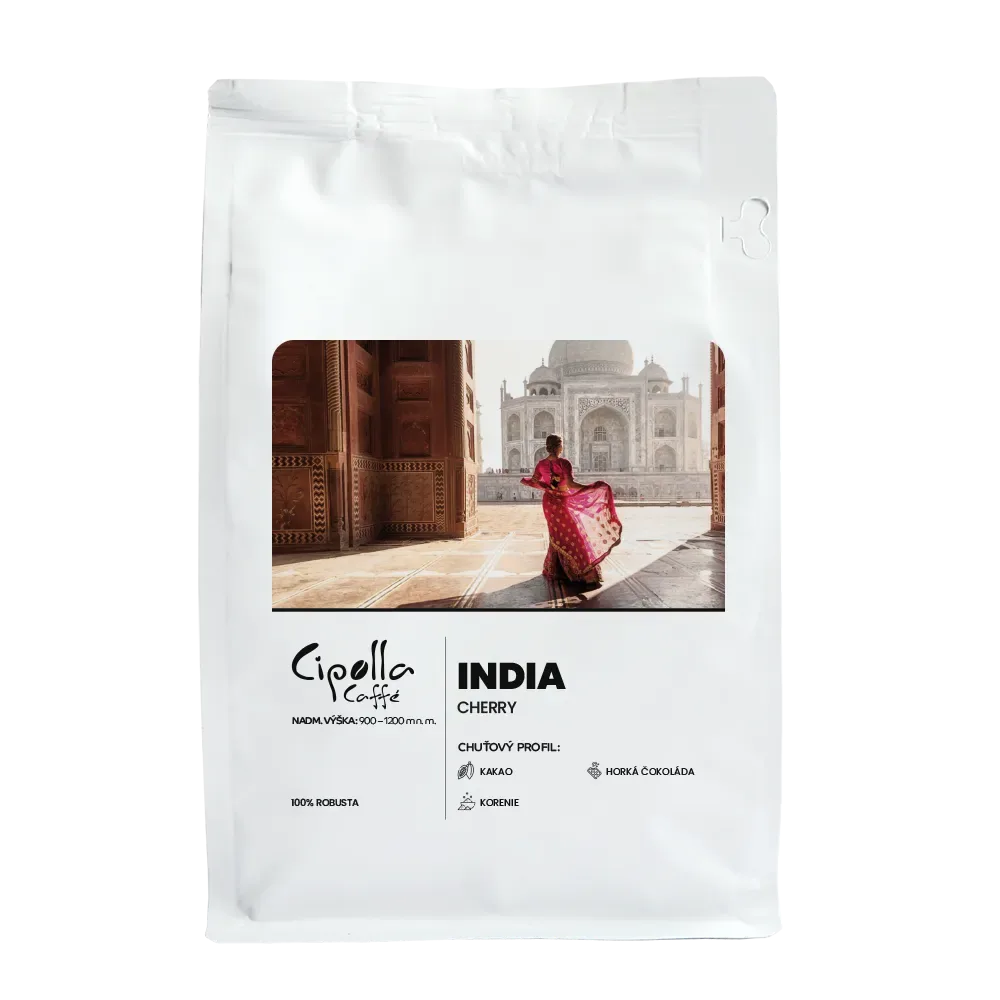
Southern India grows coffee differently from the rest of the world – in deep shade alongside black pepper and cardamom. Our India Cherry is a 100% Robusta with a full body and a thick crema, freshly roasted in Banská Bystrica.
The coffee belt · India
In a cup of Indian Robusta, expect spice, dark chocolate, and cocoa – a full body, minimal acidity, and a thick crema.
India Cherry is built for espresso and the moka pot – the darker roast and Robusta create a thick crema and an honest bitterness you will appreciate in a cappuccino too, where it will not get lost under the milk. We do not recommend it for filter; leave the delicate brews to Arabicas and give Robusta the pressure it deserves.
The coffees we roast from here
What India tastes like
The history of Indian coffee begins with a legend. In the seventeenth century, the pilgrim Baba Budan is said to have smuggled seven green coffee seeds out of Yemen and planted them in the hills of today's Karnataka – at a time when the Arab world strictly guarded the export of fertile seeds. Whatever the truth of the story, India became one of the first coffee countries outside Africa and Arabia. In the south of the subcontinent, people still drink strong, sweetened filter coffee – as much of an institution there as Sunday lunch is here in Slovakia.
Indian coffee grows almost exclusively in the south of the country, in the mountains of the Western Ghats. Unlike most of the world, coffee trees here are grown in the dense shade of tall trees, alongside black pepper, cardamom, and other spices – a plantation looks more like a forest than a field. The shade slows the ripening of the cherries and the monsoon climate brings moisture. Our India Cherry ripens at altitudes of around 1,000 m above sea level, which is unusually high for Robusta, and you can taste it in the bean.
Robusta holds a special position among coffees, and India is one of the few countries able to grow it at a quality fit for a roastery. Compared to Arabica it has a more robust body, less acidity, and more caffeine, and in espresso it builds a thick, stable crema. Our India Cherry brings spiciness, dark chocolate, and cocoa – a flavor profile also attributed to the spices growing next door on the plantations. It is a coffee for those who like a strong, honestly bitter cup without sourness.
The name Cherry is the Indian term for natural processing – after harvest, whole cherries are dried in the sun until the bean can be hulled. India is also known for the monsooned Malabar specialty: beans are exposed to humid monsoon winds on the coast for several months, losing acidity and gaining earthy depth. The harvest takes place in winter and early spring, picked by hand and slowly – the way it has been done in the shade of the spice plantations for more than three centuries now.
The Baba Budangiri hills in Karnataka, where legend says the pilgrim Baba Budan planted the first seven coffee seeds smuggled from Yemen, still bear his name and rank among the oldest coffee-growing areas outside Africa and Arabia.
Regions and farms
India does not have individual regions mapped out in our atlas yet – its coffee areas are concentrated in the south of the country, in the mountains of the states of Karnataka, Kerala, and Tamil Nadu. That is where our India Cherry comes from: the shaded plantations of southern India, a 100% Robusta processed by the natural method.
India Cherry
- Variety
- 100 % Robusta
- Altitude
- 900–1,200 m a.s.l.
- Processing
- Natural
In southern India, Robusta coffee trees are traditionally grown in the shade of spice plantations, side by side with black pepper and cardamom. “Cherry” processing means the whole cherries are dried in the sun; India is one of the few countries that grows Robusta at a quality fit for espresso.

From green bean to your cup
We roast coffees from across the coffee belt in our own roastery in Banská Bystrica and ship them all over Slovakia. And if you want to get more out of every cup, come try your hand at brewing in our Barista Academy.
Where to go next on the map
Click any dot to open the story of another origin country — the number in the dot tells you how many of its coffees we’re roasting right now.
What you ask us
What is India Cherry like?+
It is a 100% Robusta from southern India, processed by the natural method – whole cherries are dried in the sun. In the cup it brings spiciness, dark chocolate, and cocoa, a full body, and a thick crema. We roast it darker, so it is ideal for lovers of strong coffee without sourness.
How does Robusta differ from Arabica?+
Robusta has a fuller body, less acidity, more caffeine, and builds a thicker, more stable crema in espresso. Its taste tends to be earthier and more bitter, with notes of chocolate and spice instead of fruit. Quality Robusta like India Cherry is therefore a traditional part of espresso blends – and it holds its own solo, too.
Why is Indian coffee grown in the shade of spices?+
In southern India, coffee trees are traditionally planted under the canopy of tall trees together with black pepper and cardamom. The shade protects the plants from the harsh sun and slows the ripening of the cherries, while the spices give farmers a second harvest from the same land. This neighborhood is also credited with the gently spicy character of Indian coffee.
How should I brew Indian Robusta?+
Best as espresso or in a moka pot – that is where Robusta shows its thick crema and full body. It also works great in milk drinks, because it does not get lost under the milk. We do not recommend filter brewing; delicate methods suit fruity arabicas better.