Papua New Guinea – Arabica from the Mountains at the End of the World
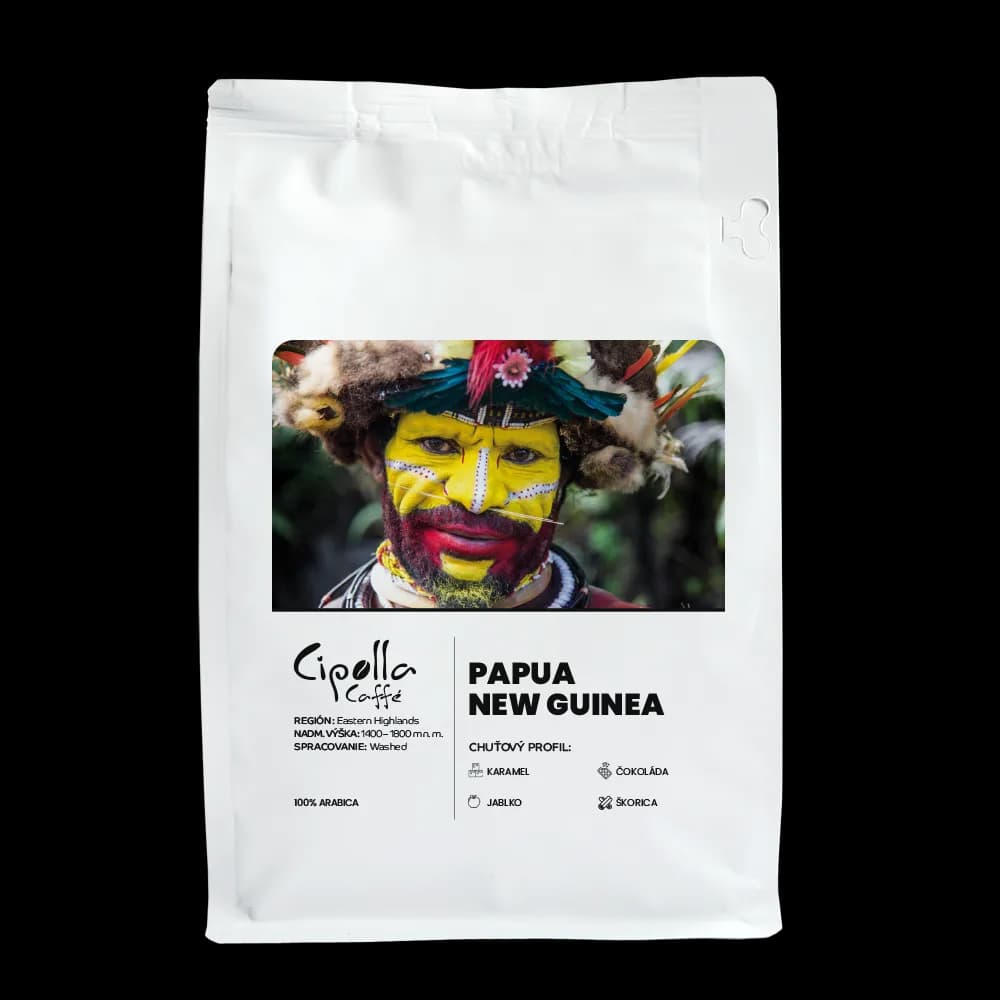
Papua New Guinea is one of the most remote coffee origins in the world. Our Elimbari comes from smallholder farmers on the high mountain slopes around Mount Elimbari, bringing together juicy apple, caramel, chocolate, and cinnamon in the cup.
The coffee belt · Papua New Guinea
Expect juicy apple, caramel, chocolate, and a pinch of cinnamon in the cup – a sweet, harmonious coffee with gentle fruity tension.
We recommend trying Elimbari as a filter coffee first – pour-over brewing plays up the apple and cinnamon and shows off the cleanness of washed processing. As espresso, the coffee shifts into caramel-chocolate sweetness and takes milk well. It's a versatile bean worth experimenting with.
The coffees we roast from here
What Papua New Guinea tastes like
Coffee is a fairly young crop in Papua New Guinea – large-scale cultivation only began in the first third of the twentieth century. Tradition has it that the first seedlings grew from seeds of the famous Jamaican Blue Mountain coffee, and you can still taste that noble heritage in the local beans today. While Brazil and Colombia developed vast plantation economies, the great majority of the harvest here comes from small family gardens: a few dozen or a few hundred trees among vegetables and banana plants, tended by the whole family. The coffee is grown practically without chemicals, and for many families in the highlands it is the only source of cash income.
The island's interior is a massive highland with valleys the outside world only discovered a few generations ago. Coffee trees grow here on fertile volcanic soils at high altitudes – our Elimbari ripens at roughly 1,400 to 1,800 m above sea level on the slopes of the Bismarck Range. The equatorial sun and cool mountain nights give the beans a density and sweetness that lowland coffee can never reach. Yet the whole country produces less coffee than a single large Brazilian region, and the beans' journey from the remote valleys to the sea is a small adventure in itself.
In flavor, coffee from Papua New Guinea sits somewhere between worlds. It has the tropical fullness and sweetness of Indonesian coffees, yet thanks to washed processing also a cleanness closer to Central America. Our Elimbari shows this perfectly: juicy apple with cinnamon gives it playfulness, while caramel and chocolate provide a firm, sweet foundation. It is a coffee with character that still remains harmonious and approachable – exotic without extremes, something you don't meet in the cup very often.
In Papua New Guinea, both harvesting and processing are handwork in the truest sense of the word. Farmers pick the cherries gradually as they ripen and process them using the washed method, which gives the cup a clean, orderly profile. Old varieties like Typica and Arusha are still grown in the mountains – they yield less, but taste richer. The result is a bean backed by hundreds of smallholder farmers, making every cup something of a joint effort by entire mountain communities.
Many of Papua New Guinea's highland valleys were only discovered by the outside world in the 1930s – so today, coffee grows in places that were completely unknown to the rest of the world just a hundred years ago.
Regions and farms
Our coffee comes from the central highlands of Papua New Guinea, listed in our atlas under the Eastern Highlands region. The Elimbari bean is named after Mount Elimbari in Chuave District and was grown by many smallholder farmers from the surrounding mountain slopes.
Papua New Guinea Elimbari
- Altitude
- 1,400–1,800 m a.s.l.
- Processing
- Washed
This coffee is named after the majestic Mount Elimbari and comes from a multitude of smallholder growers in the highlands of Papua New Guinea. Cherries from remote mountain slopes are processed using the washed method, which gives the cup a clean, harmonious profile.

From green bean to your cup
We roast coffees from across the coffee belt in our own roastery in Banská Bystrica and ship them all over Slovakia. And if you want to get more out of every cup, come try your hand at brewing in our Barista Academy.
Where to go next on the map
Click any dot to open the story of another origin country — the number in the dot tells you how many of its coffees we’re roasting right now.
What you ask us
What does coffee from Papua New Guinea taste like?+
Sweet, full, and at the same time clean. It combines tropical fullness with clear notes of fruit and spice – in our Elimbari specifically apple, caramel, chocolate, and cinnamon. Thanks to washed processing, it comes across as surprisingly elegant.
Where does Elimbari coffee come from?+
It is named after Mount Elimbari in Chuave District in the highlands of Papua New Guinea. The beans were grown by many smallholder farmers at roughly 1,400 to 1,800 m above sea level on the slopes of the Bismarck Range. So it is not a single farm, but the joint effort of mountain communities.
Is coffee from Papua New Guinea acidic?+
Only gently. Elimbari has a juicy apple acidity balanced by caramel and chocolate sweetness. The result is a lively yet harmonious cup without sharp edges.
Is Elimbari better for espresso or filter?+
Both. Filter highlights the apple, cinnamon, and cleanness of the cup, while espresso pulls out the caramel and chocolate and takes milk well. We recommend starting with filter and then comparing the two.